What Substrates can I use for Beetles?

Japanese Rhino Beetle larvae (Trypoxylus dichotomus) on Flake Soil
Introduction:
The type of substrate suitable for beetle larvae depends largely on the group of beetle it belongs to. Many beetle species can be raised successfully using natural materials collected from the wild, provided they are chosen and prepared correctly. For advanced breeders, homemade substrates such as flake soil and kinshi offer greater control and consistency, and these will be discussed later in the guide.
The beetles most commonly kept by hobbyists generally fall into the following groups:
1. Flower Beetles (Subfamily Cetoniinae)
Examples: Pachnoda spp., Eudicella spp., Mecynorrhina spp.
2. Rhino Beetles (Subfamily Dynastinae)
Examples: Dynastes spp., Megasoma spp., Xylotrupes spp.
3. Stag Beetles (Family Lucanidae)
Examples: Dorcus spp., Prosopocoilus spp., Phalacrognathus sp.
In this guide, I will cover four main types of substrates that can be used to rear beetles at home. Two of these, leaf litter and white-rot wood, can be collected from the wild if you have access to a deciduous woodland. The remaining two, flake soil and kinshi, are cultivated substrates prepared by the keeper and are widely used in more advanced breeding setups.
What to Avoid:
Coconut products (e.g. coco-peat, coco-coir, coco-husk):
Contain virtually no nutrition and are indigestible to beetle larvae. Ingestion by speicalist leaf/wood feeders such as rhino/stag/flower beetle larvae can lead to gut impaction and death.
Softwoods (e.g. pine, spruce):
Avoid collecting materials from or near coniferous areas. The resins and sap in these trees can be toxic to larvae.
Leaf Litter:
Suitable for: Flower Beetles (Cetoniinae)
Leaf litter can be collected from woodlands and parks dominated by hardwood trees such as oak (Quercus) and beech (Fagus). The forest floor usually consists of threelayers:
Top layer: Freshly fallen leaves – not yet decomposed and low in nutrients for larvae.
Middle layer: Leaf humus – a mixture of leaf litter at various stages of decomposition.
Bottom layer: Mineral soil – nutrient-poor.
This partially decomposed leaf layer (humus) that is sandwiched between the top and bottom layer of the forest floor is rich in microorganisms and organic matter, making it ideal for both egg-laying and larval development.
However, note that some Cetoniinae species, such as Goliath Beetles (Goliathus spp.), have higher protein requirements, and naturally prey on smaller invertebrates in the wild. These species benefit from supplemental protein sources such as fish food, dog/cat kibble, or similar foods when reared in captivity. These larger species of Cetoniinae tend of also have cannibalistic tendencies, so they should be housed individually.
Collecting leaf litter for beetle larvae at a local park
Decayed Wood
Suitable for: Rhinoceros Beetles (Dynastinae) and Stag Beetles (Lucanidae)
When a tree dies, its decomposition is driven primarily by white-rot fungi, which produce enzymes capable of breaking down a tough structural component in the wood called lignin. Lignin is part of the cell wall that gives trees their structure and rigidity. The enzymes produced by white-rot fungi enable the chemical bonds of lignin to be split, aiding in it’s decomposition. As lignin decomposes, the wood becomes soft, fibrous, and nutrient-rich, allowing other organisms (and beetle larvae) to feed on it. Wood decayed by white-rot fungi can be identified by its pale, white/cream colour and spongy texture. This is the material you want for rearing larvae.
In contrast, wood affected by brown-rot fungi turns dark brown and crumbly. As these fungi break down cellulose instead of lignin, it leaves the wood nutritionally useless for beetle larvae.
Stages of Wood Decay
Decayed wood can be broadly divided into five stages:
Hard decayed wood: affected by white-rot fungi but still firm - ideal for egg laying in Dorcus spp..
Medium decayed wood: wood becomes paler in colour and slightly malleable by hand - ideal for egg laying in Lampriminae.
Soft decayed wood: now possible to break apart by hand with some effort – ideal for feeding Lucanidae larvae.
Wood flakes: easily crumbled by hand - ideal for feeding Dynastinae larvae.
Soil stage (dirt/mud): too decomposed, mostly inorganic.

A fallen tree that has been broken down by white-rot fungi
Flake Soil:
Suitable for: Flower Beetles (Cetoniinae), Rhinoceros Beetles (Dynastinae) and Stag Beetles (Lucanidae)
Flake soil is a cultivated substrate that can be produced at home through the controlled fermentation of hardwood sawdust. It is widely regarded as the most effective substrate for rearing beetle larvae and is the preferred choice for advanced breeders due to its consistency and versatility. Unlike natural substrates collected from the wild, where different beetle groups require different materials, flake soil provides a single substrate suitable for most species in the three major beetle groups. My personal recipe for homemade Flake Soil is detailed in the Flake Soil Guide.
Larvae of most Cetoniinae, Dynastinae and Lucanidae species obtain most of their nutrition from cellulose, a structural component of plant material. In raw wood, cellulose is locked within lignin, a tough compound that larvae cannot digest. For this reason, fresh or unfermented sawdust is unsuitable as a substrate. During fermentation, microorganisms break down lignin, making the cellulose accessible to larvae.

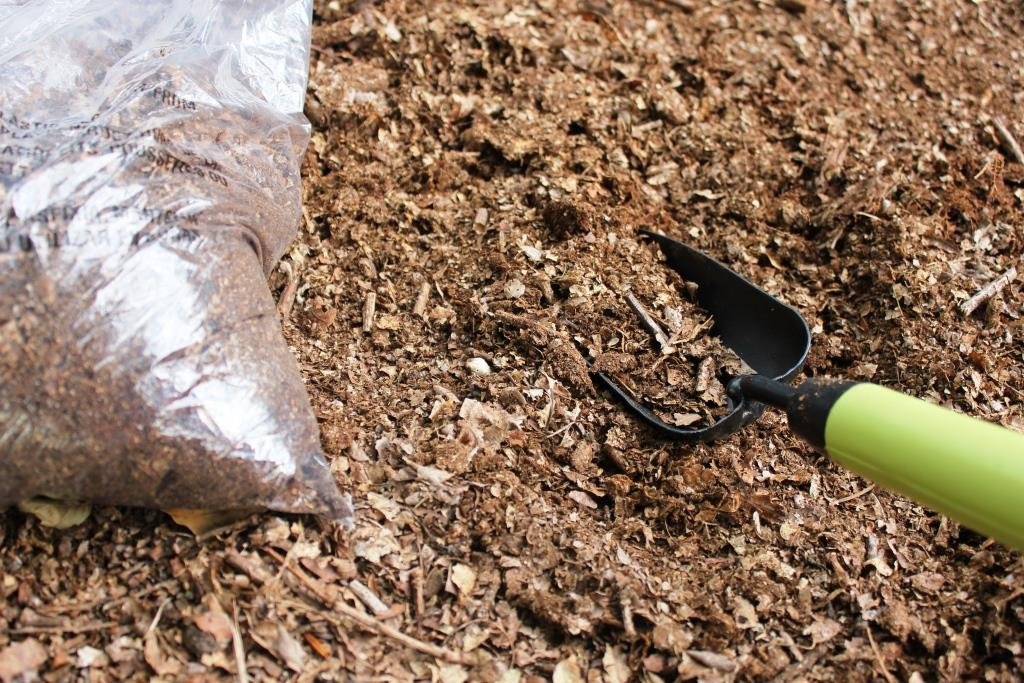
Boxes of freshly made flake soil
Kinshi:
Suitable for: Stag Beetles (Lucanidae)
Kinshi is a specialised, fungus-based substrate produced by inoculating hardwood with white-rot fungi and allowing it to fully colonise and soften over time. It originates from Japanese stag beetle breeding practices and is most commonly used as a larval substrate for stag beetles.
Outside of the beetle breeding scene in East Asia, kinshi is used far less frequently. This is largely because it is relatively difficult to produce reliably at home, requiring careful control of moisture, temperature, sterility, and fungal strain. Failed cultures are common, even among experienced keepers, which has limited its widespread adoption in Western hobbyist circles.
Kinshi is created by introducing white-rot fungi into hardwood logs or sawdust. As the fungi grow, they break down lignin within the wood and make the cellulose accessible to larvae, similarly to flake soil fermentation. Rather than being a general-purpose feeding substrate, kinshi is best understood as a biologically active wood substrate that closely mimics the earliest stages of naturally decaying wood found in the wild.
Species of White Rot Fungi Utilised for Kinshi Production
A variety of white-rot fungi can be used for kinshi production. However, not all species perform equally, and some stag beetles show strong preferences for particular fungal genera, especially for oviposition.
1. Pleurotus spp.
Pleurotus spp. are the most commonly used species of fungi in kinshi production due to their versatility and great results across a wide range of stag beetle species commonly kept in the hobby.
2. Tramates spp.
Trametes spp. are commonly encountered in the wild and they can often be found on decaying trees and logs in parks and woodland worldwide. They are the next most versatile species after Pleurotus spp., and are accepted by a broader range of stag beetle species.
Although Trametes spp. may produce smaller adults than Pleurotus spp. in some stag beetle species, it is essential for specialist feeders. Species such as Mesotopus spp. and Allotopus spp. require logs colonised by Trametes spp. for egg laying and successful larval development.
Compared to Ganoderma spp., Mesotopus and Allotopus tend to prefer Trametes less for oviposition. However, larvae often grow larger when reared on wood that has been colonised by Trametes spp..
3. Ganoderma spp.
Ganoderma spp. were the fungi resposible for a major breakthrough in the hobby that enabled successful captive breeding of Mesotopus spp. and Allotopus spp.. Since this discovery, Ganoderma spp. have become esential fungi for breeding these genera, as they prefer logs colonised by Reishi spp. for oviposition over other fungi.
Compared to Trametes spp., Mesotopus and Allotopus show a stronger preference for Ganoderma spp. for oviposition. However, larvae typically achieve smaller final sizes when reared on wood that has been colonised by Ganoderma spp..
